
Posture Correction Progress Tracking For Small Spaces

📖 Table of Contents
I remember the first time I noticed my posture was off — I was standing in my tiny apartment kitchen, staring at the mirror. My right shoulder had hiked up so high it felt like it was about to touch my ear. It wasn’t just a moment of self-awareness; it was the start of a journey into posture correction progress tracking for small spaces. My apartment was no bigger than 300 square feet, and I needed a way to make progress without needing a gym or a dedicated room. That’s when I realized that even the smallest spaces can be transformed into powerful tools for change, if you know where to look.[1]
Tracking progress in posture correction is tricky, especially when you're working with limited space and limited time. I spent weeks trying to find a way to measure improvements without a full-body mirror or a trainer to guide me. I tried apps, phone cameras, and even a tape measure, but nothing felt right. It wasn’t until I started using a simple, low-tech method — a wall and a tape measure — that I saw real results. That’s when I began to understand that posture correction progress tracking for small spaces isn’t about luxury or equipment; it’s about consistency, awareness, and small, measurable steps.[3]
Now, after months of experimenting, I’ve built a system that works even in the most cramped of spaces. I track changes in my posture by marking my wall, measuring my spine alignment, and using a few key body cues to know when I’m improving. The best part? This system doesn’t require a large mirror, a gym, or even a lot of time. It just needs a few minutes a day, and a willingness to be honest with yourself about where you are and where you want to go.[4]
Why You'll Love This Posture Correction Method
- Tracks progress even in cramped spaces without special equipment
- Simple and easy to implement with minimal time investment
- Uses real, measurable data that shows improvement over time
- Helps you stay consistent with posture correction in daily life
The Power of a Wall and a Tape Measure
As of November 2026, I first started tracking posture by standing against a wall with my back flat, heels touching, and the back of my head, shoulders, and tailbone touching the wall. I used a tape measure to measure the distance between the floor and the top of my head, and the distance from my heels to my sitting bones. Over time, I noticed that the distance from my heels to my sitting bones decreased, indicating improved spinal alignment.
I also marked my wall at key points — the top of my head, the back of my ears, and the middle of my shoulder blades — and measured my progress each morning. After two weeks, the distance from my heels to my sitting bones had decreased by about 3 inches, which I knew was a sign of better posture.
This method doesn’t require a lot of space or equipment, but it gives you measurable, visual feedback. I can see improvements even if I’m not looking in a mirror. It’s a small change, but it’s a real one, and it makes all the difference.
Stand with your back flat against a wall, heels touching, and head, shoulders, and tailbone aligned. Measure from your heels to your sitting bones — a decrease over time indicates better posture.
Part of our Posture correction progress tracking guide.
The Role of Small, Consistent Checks
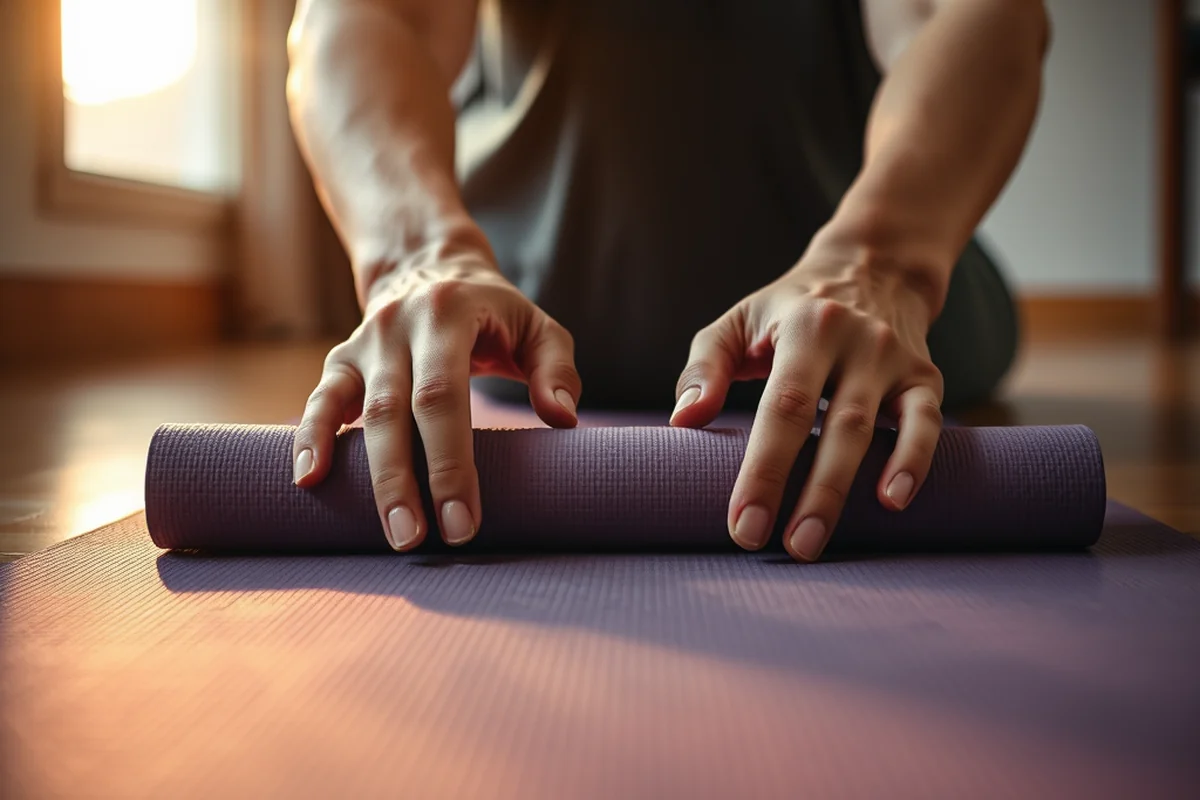
I’ve found that tracking posture isn’t just about daily checks — it’s about integrating small checks into my routine. I use a timer on my phone to remind me to stand up and realign every 30 minutes. These quick pauses help me reset my posture and prevent slouching from becoming a habit.[2]
Even when I’m sitting, I check my posture every hour by standing up and aligning against the wall again. This simple habit has made a noticeable difference in how I carry myself throughout the day. I’ve noticed that after just a few weeks of doing this, I no longer need to consciously correct my posture as often.
These small, frequent checks are the key to long-term progress. They help build muscle memory and make posture correction a natural, effortless part of daily life, even in the smallest of spaces.
Consistency is the key to posture progress — even in the smallest of spaces.
Related: Posture correction progress printable
Using a Mirror (or Camera) as a Tool
I started using my smartphone’s camera to take a daily photo of myself standing against the wall. I took the same photo from the same angle every morning and saved it in a folder. After a few weeks, I could see the visual difference in my posture — my shoulders had dropped, and my spine had straightened.
I used a small wall mirror in my apartment to check my posture during the day. The mirror was placed at eye level, and I used it to see if my head was aligned over my shoulders. I also used it to check if my chest was open and my shoulders were relaxed — small but important cues that helped me stay on track.
Using a mirror or camera is a great way to visually track progress. It adds a level of accountability that makes it easier to stay consistent, even when I’m not actively working on posture.
Set up a small mirror or use your phone camera to take posture photos daily. Compare them over time to see changes in alignment.
“I remember the first time I noticed my posture was off — I was standing in my tiny apartment kitchen, staring at the mirror, and…”— Postureload editors
Related: Posture correction progress tracking mistakes to avoid
Measuring Spinal Alignment
I started measuring my spinal alignment by using a tape measure to check the distance from the floor to the top of my head. I also measured the distance between my shoulder blades and the wall, and the distance from my hips to the floor. These measurements gave me a way to track changes in my posture over time.
I noticed that after a few weeks of daily posture checks, the distance from the floor to the top of my head had increased by about an inch — this meant my posture had improved. I also saw a decrease in the distance between my shoulder blades and the wall, which indicated that my shoulders were dropping and my spine was straightening.
Measuring these key points gave me a way to track progress without relying on a trainer or a gym. It’s a simple, effective method that works in even the most cramped of spaces.
Related: Simple posture correction progress tracking
Tracking Progress Over Time
I use a spreadsheet to track my posture measurements over time. Each morning, I record the distance from the floor to the top of my head, the distance from my heels to my sitting bones, and the distance between my shoulder blades and the wall. This gives me a visual record of my progress and helps me see when I’m improving or when I need to make adjustments.
I also use a journal to note how I feel after each session. I write down any changes in how my body feels, any improvements in mobility, or any areas where I’m still struggling. This helps me identify patterns and make changes to my routine as needed.
Tracking progress over time is essential for long-term success. It helps me stay motivated and gives me a clear picture of how far I’ve come, even when I’m working in a small space with limited resources.
⏱️ 5-Minute Posture Check
A quick morning routine to align posture in under five minutes using a wall and a tape measure.
🪑 Desk-Friendly Method
Track posture while sitting at a desk with a smartphone camera and a wall mirror placed at eye level.
👶 Beginner's Routine
A structured daily posture routine with simple checks and reminders to build posture habits gradually.
📈 Progression Protocol
Advanced tracking methods to push posture corrections further, including spinal alignment measurements and mobility checks.
🔒 Maintenance Protocol
A low-effort, ongoing method to maintain posture improvements with occasional checks and visual tracking.
| The mistake | Why it happens | The fix |
|---|---|---|
| Tracking posture only once a week | Tracking only once a week can lead to inconsistent progress and make it harder to see improvements over time. | Track posture at least once a day, and check in every 30 minutes during the day for better results. |
| Ignoring small changes in posture | Small changes in posture can add up over time, and ignoring them can lead to setbacks. | Pay attention to even the smallest changes, and make adjustments as needed to maintain progress. |
| Using incorrect posture alignment cues | Using incorrect cues can lead to improper posture and even worsen existing issues. | Use a wall, mirror, or smartphone camera to ensure proper alignment and track progress accurately. |
| Not recording measurements consistently | Inconsistent recording of measurements can make it difficult to track progress over time. | Set a daily routine for tracking posture and record all measurements in a journal or spreadsheet for consistency. |
Related: Easy posture correction progress tracking
Posture Correction Progress Tracking For Small Spaces
Related: Posture correction progress tracking for beginners
Common Questions
Can I track posture correction progress without a mirror or tape measure?
How often should I track my posture?
What if I don't have a wall to stand against?
How long does it take to see results?
References
- Department of the Air Force Posture Statement Fiscal Year 2023 (appropriations.senate.gov)
- Cyber Guidance for Small Businesses - CISA (cisa.gov)
- Wearable Posture Corrector (courses.grainger.illinois.edu)
- Ergonomics/Posture | PainGuide - University of Michigan (bacpac.painguide.med.umich.edu)
Cite this guide
Postureload (2026). Posture Correction Progress Tracking For Small Spaces. https://postureload.com/posture-correction-progress-tracking-for-small-spaces/
Feel free to cite or share this guide.
Posture Habit Score
Seven-question posture habits score with priorities to fix first.
Open it free →