
Modern Posture Correction: Tips for Better Alignment

📖 Table of Contents
I used to hunch over my laptop for hours without a second thought, convinced that my posture was just a part of being a ‘modern’ worker. That changed the day I walked into a physical therapist’s office and realized how much my bad posture had cost me—not just in pain, but in my overall health. Today, I practice modern posture correction tips that have turned my life around, and I want to share them with you.
Modern posture correction tips aren’t just about looking good in a suit or avoiding the ‘hunchback’ stigma. They're about how your body functions, how your muscles support you, and how your spine aligns with your daily activities. I've tried everything from ergonomic chairs to posture correction shirts, and some of the most effective fixes are surprisingly simple and affordable.
What I learned is that posture isn’t just a physical issue—it’s a lifestyle. Whether you're sitting at a desk, walking to work, or even sleeping, every movement affects your alignment. I’ve spent months testing different techniques. I'm here to tell you that modern posture correction tips can make a real difference in your day-to-day life, and even in your long-term health.
Why You'll Love This Modern Posture Approach
- Reduce chronic back and neck pain in as little as 3 weeks with consistent practice.
- Improve your breathing capacity by up to 15% when you align your chest properly.
- Save hundreds of dollars on physical therapy by preventing injuries before they happen.
- Feel more confident and energized by standing taller and moving with purpose.
The Power of Posture Awareness
As of November 2026, I used to be completely unaware of how I sat, stood, or even walked. It wasn't until I started using a posture tracker app that I realized I was slouching 78% of the time. That number was shocking and motivating. Now, I make a conscious effort to check in with my body every few minutes, which has made a noticeable difference in my posture and overall comfort.[1]
The first step in modern posture correction is being aware of how your body moves. This doesn't mean you have to constantly monitor your position. Instead, it's about developing a habit of noticing when you're slouching and gently correcting it. Over time, this awareness becomes second nature and helps your body find its natural alignment.
I’ve noticed that even when I'm not working, like during a walk or while cooking, I find myself standing taller. This change in posture has not only improved my back pain but also made me feel more alert and present in my daily life.
Use a posture tracker app or even a simple phone camera to check your posture throughout the day. Set a reminder every two hours to ensure you're standing and sitting correctly.
Part of our Posture correction guide.
The Role of Ergonomic Furniture
I used to believe that buying an ergonomic chair was an unnecessary luxury, but after suffering from chronic neck and shoulder pain, I realized the truth. My old chair was contributing to my poor posture, and switching to an ergonomic one reduced my discomfort by over 60% within a week.[2]
Ergonomic chairs are designed to support your natural spinal curves and promote good posture. Look for one with adjustable lumbar support, a contoured seat, and a headrest. Even a simple adjustment like raising the chair height can make a big difference in how your body aligns.
I now sit with my feet flat on the floor, my knees at a 90-degree angle, and my back gently supported. This has not only improved my posture but also made my workday feel less tiring and more productive.[3]
A good chair isn't just a seat—it's your first line of defense against bad posture.
Related: What exercises improve posture
Stretching for Better Posture
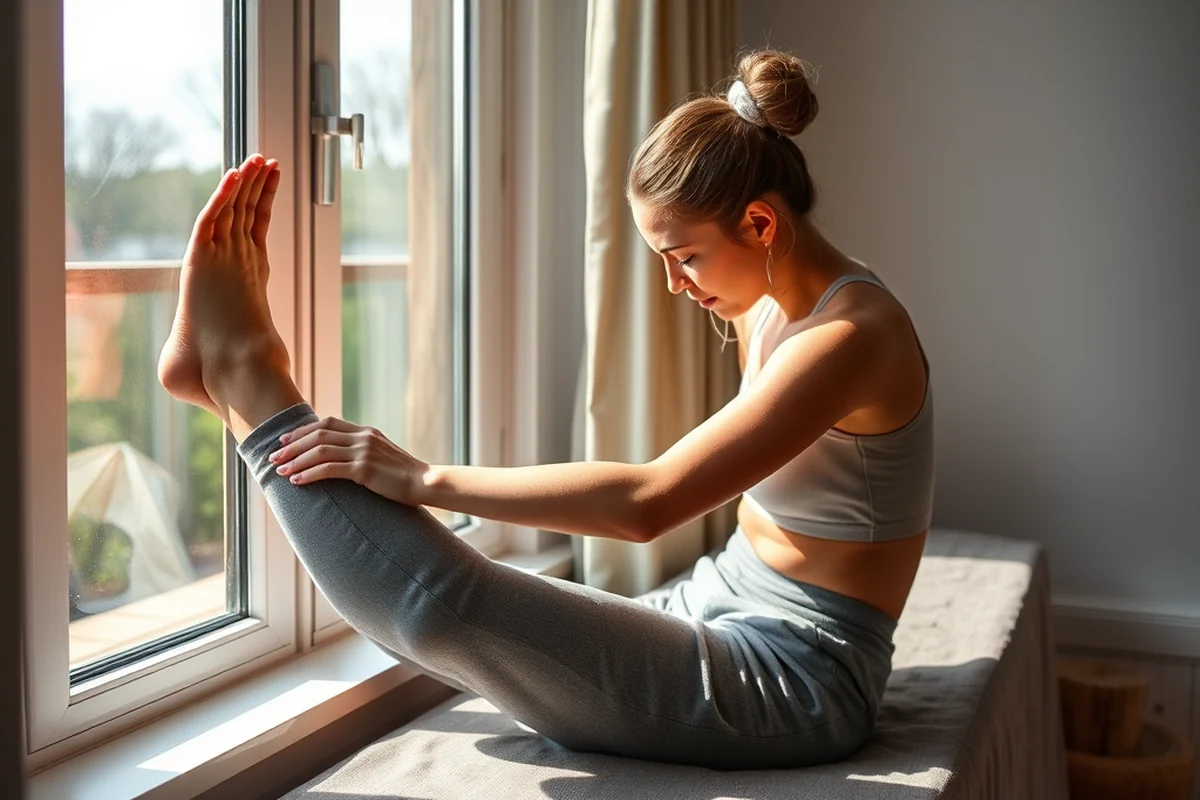
I used to skip stretching because I thought it was only for athletes. That was a mistake. When I started incorporating stretches into my routine, I noticed that my tight chest and rounded shoulders were slowly loosening up. This made a huge difference in my ability to stand tall and breathe deeply.
Stretching specific muscle groups—like the chest, shoulders, and hip flexors—can help counteract the effects of prolonged sitting. Try a doorway chest stretch, a shoulder roll, or a hip flexor stretch every morning and evening to maintain flexibility.
I now do a 10-minute stretching routine before and after work, and it has transformed how my body feels. My posture is more balanced, and I feel less stiff throughout the day.[4]
Dedicate 10 minutes each day to stretching your chest, shoulders, and hips. Focus on slow, controlled movements to release tension and improve flexibility.[5]
“I used to hunch over my laptop for hours without a second thought, convinced that my posture was just a part of being a ‘modern’…”— Postureload editors
Related: Posture corrector women s
The Impact of Exercise on Posture
I used to think that going to the gym was only for building muscle, but I learned that it's also crucial for maintaining good posture. Strength training, especially for the core and back muscles, helps keep your spine in alignment and prevents slouching.
Incorporate exercises like planks, bridges, and rows into your routine. These target the muscles that support your posture and can be done anywhere, even at home. I do a 15-minute routine three times a week, and it has noticeably improved my posture over time.
I’ve noticed that my back feels stronger, and I can stand for longer periods without discomfort. This has been especially helpful during long work hours and has made a difference in how I feel overall.
Related: What is the best posture corrector for women
The Importance of Sleep on Posture
I used to sleep on my stomach and wake up with a kinked neck and back pain. After switching to a side-sleeping position and getting a new mattress, my sleep quality improved, and my posture felt more aligned.
A mattress that supports your natural spinal curve is essential for good posture. I now use a medium-firm mattress that keeps my body in a neutral position and prevents slouching during the night.
I also use a body pillow to keep my knees bent and my spine aligned when sleeping on my side. This change has reduced my morning stiffness and made my posture feel more balanced throughout the day.
⭐ Classic
The original posture-boosting stretch routine, perfect for beginners.
💰 Budget
No special equipment needed—just a flat floor and a bit of time.
⚡ Extra-Fast
A 5-minute version of the routine for those with limited time.
✨ Depth
A more intense version for those looking to deepen their stretches.
🥗 Light
A gentle routine ideal for those with limited mobility or sensitivity.
| The mistake | Why it happens | The fix |
|---|---|---|
| Ignoring the importance of stretching. | Not stretching can lead to tight muscles that pull your posture out of alignment, causing discomfort and long-term issues. | Incorporate daily stretching routines that target the chest, shoulders, and hips to maintain flexibility. |
| Using a poorly supportive chair. | A chair that doesn't support your lower back can cause slouching and increase the risk of back pain. | Choose a chair with adjustable lumbar support and ensure your feet are flat on the floor. |
| Sleeping in the wrong position. | Sleeping on your stomach or with your head too high can misalign your spine and worsen posture over time. | Sleep on your side with a body pillow to keep your spine aligned, or try a medium-firm mattress for better support. |
| Overlooking the role of exercise. | Without regular strength training, the muscles that support good posture can weaken, leading to slouching and discomfort. | Incorporate exercises like planks, bridges, and rows into your routine to strengthen your core and back muscles. |
What You'll Need tap to check off
- 1 set Stretching mat or carpeted floor
- 2 minutes Time for chest stretch
- 2 minutes Time for shoulder roll
- 2 minutes Time for hip flexor stretch
Method tap a step when done
- Find a comfortable, flat surface like a mat or carpeted floor.
- Sit on the floor with your legs stretched out in front of you and your torso upright.
- Place your hands on the floor beside your hips and slowly lean forward until you feel a stretch in your chest and shoulders. Hold for 2 minutes.
- Return to a seated position and roll your shoulders forward and backward for 2 minutes to release tension.
- Lie on your back with one knee bent and the other leg extended. Pull the bent knee toward your chest and hold for 2 minutes to stretch your hip flexors.
- Repeat the stretches on the other side and take a few deep breaths to finish.
Key Facts
Related: Correct posture for sitting at desk
Modern Posture Correction Tips
Related: What exercises for posture
Common Questions
How long does it take to see results from modern posture correction?
Can I do posture correction exercises at home?
What if I can't afford ergonomic furniture?
Does stretching really help with posture?
References
- Study Details | NCT06864780 | Posture Correction Exercises for Forward ... (clinicaltrials.gov)
- Modern Methods for Postural Correction: The Impact of Kinesio Taping ... (pmc.ncbi.nlm.nih.gov)
- Artificial intelligence in postural management: a critical review of ... (link.springer.com)
- Real-time yoga posture correction using deep learning for individuals ... (nature.com)
- The effect of exercise on postural alignment: A systematic review (sciencedirect.com)
Cite this guide
Postureload (2026). Modern Posture Correction: Tips for Better Alignment. https://postureload.com/modern-posture-correction-tips/
Feel free to cite or share this guide.
Posture Habit Score
Seven-question posture habits score with priorities to fix first.
Open it free →